
Introduction
The demand for DevOps Engineers continues to grow rapidly across startups, product companies, and enterprise organizations. As businesses increasingly adopt cloud computing, automation, and continuous delivery practices, DevOps professionals have become essential for building scalable and reliable software systems.
If you are wondering how to become a DevOps Engineer in 2026, this roadmap will provide a structured learning path that takes you from beginner level to industry-ready professional.
Unlike many career paths that require deep specialization from day one, DevOps combines multiple disciplines, including Linux, Cloud Computing, Networking, Automation, Containers, Infrastructure as Code, Monitoring, and CI/CD pipelines.
The good news is that you do not need to master everything at once. By following a step-by-step roadmap, you can systematically build the skills employers expect from modern DevOps Engineers.
In this guide, we will cover the complete DevOps Roadmap 2026, including essential tools, technologies, certifications, and projects.
What is DevOps?
DevOps is a combination of Development and Operations practices designed to improve collaboration between software development teams and IT operations teams.
The primary goal of DevOps is to deliver software faster, more reliably, and with fewer errors through automation and continuous improvement.
DevOps focuses on:
- Automation
- Continuous Integration (CI)
- Continuous Delivery (CD)
- Infrastructure as Code (IaC)
- Monitoring and Logging
- Collaboration and Communication
Organizations that adopt DevOps can release features more frequently while maintaining system stability and security.
Why Choose DevOps as a Career in 2026?
DevOps remains one of the most promising technology careers due to several factors:
High Demand
Almost every company using cloud platforms requires DevOps professionals to manage infrastructure and deployment pipelines.
Attractive Salaries
DevOps Engineers are among the highest-paid technology professionals because they possess a diverse skill set covering development, infrastructure, and automation.
Remote Work Opportunities
Many organizations hire DevOps professionals remotely because most DevOps activities can be performed from anywhere.
Continuous Learning
DevOps provides exposure to modern technologies including Cloud Computing, Kubernetes, AI infrastructure, and automation platforms.
Step 1: Learn Linux Fundamentals
Linux is the foundation of DevOps.
Most cloud servers run Linux-based operating systems. Therefore, every aspiring DevOps Engineer should become comfortable working in a Linux environment.
Key topics to learn:
- Linux file system
- File permissions
- User management
- Process management
- Shell scripting
- Package management
- Networking commands
Important Linux Commands:
- ls
- cd
- pwd
- chmod
- chown
- grep
- find
- top
- ps
- netstat
- curl
Practical Experience:
- Install Ubuntu on a Virtual Machine
- Create users and groups
- Configure SSH access
- Write shell scripts
Step 2: Understand Networking Basics
Networking is essential because DevOps Engineers regularly troubleshoot connectivity issues between applications, servers, databases, and cloud services.
Topics to learn:
- IP Addressing
- DNS
- HTTP and HTTPS
- TCP and UDP
- Load Balancers
- Firewalls
- Reverse Proxies
Important Tools:
- ping
- traceroute
- nslookup
- dig
- curl
Understanding networking concepts will help you solve infrastructure issues more effectively.
Step 3: Learn Git and GitHub
Version control is one of the most important skills in DevOps.
Git allows teams to track code changes and collaborate efficiently.
Topics to learn:
- Git repositories
- Branching
- Merging
- Pull requests
- Git workflows
- Conflict resolution
Common Commands:
- git init
- git clone
- git add
- git commit
- git push
- git pull
GitHub Skills:
- Repository management
- Pull requests
- GitHub Actions
- Collaboration workflows
Every DevOps Engineer should be comfortable managing repositories and CI/CD integrations.
Step 4: Learn Programming and Scripting
You do not need to become a software developer, but you should understand automation scripting.
Recommended Languages:
Python
Python is widely used for:
- Automation
- Cloud management
- Infrastructure scripting
- API integration
Bash
Bash scripting is essential for Linux administration and automation tasks.
Learn:
- Variables
- Loops
- Conditions
- Functions
- File operations
Automation skills significantly improve productivity and reduce manual work.
Step 5: Learn Cloud Computing
Cloud computing is one of the most important parts of the DevOps roadmap.
Choose one cloud platform initially.
Recommended Platform:
Amazon Web Services (AWS)
Core AWS Services:
IAM
Identity and access management.
EC2
Virtual servers in the cloud.
S3
Object storage service.
VPC
Virtual networking environment.
RDS
Managed databases.
CloudWatch
Monitoring and logging.
Load Balancer
Traffic distribution across servers.
Auto Scaling
Automatic infrastructure scaling.
After mastering AWS fundamentals, you can explore Azure and Google Cloud Platform.
Step 6: Learn CI/CD Pipelines
CI/CD is the heart of DevOps.
Continuous Integration helps developers merge code changes frequently.
Continuous Delivery automates software deployment processes.
Popular CI/CD Tools:
- Jenkins
- GitHub Actions
- GitLab CI/CD
- Azure DevOps
Pipeline Workflow:
- Developer pushes code.
- Build process starts.
- Automated tests run.
- Security scans execute.
- Application deploys automatically.
Building CI/CD pipelines is a critical DevOps skill.
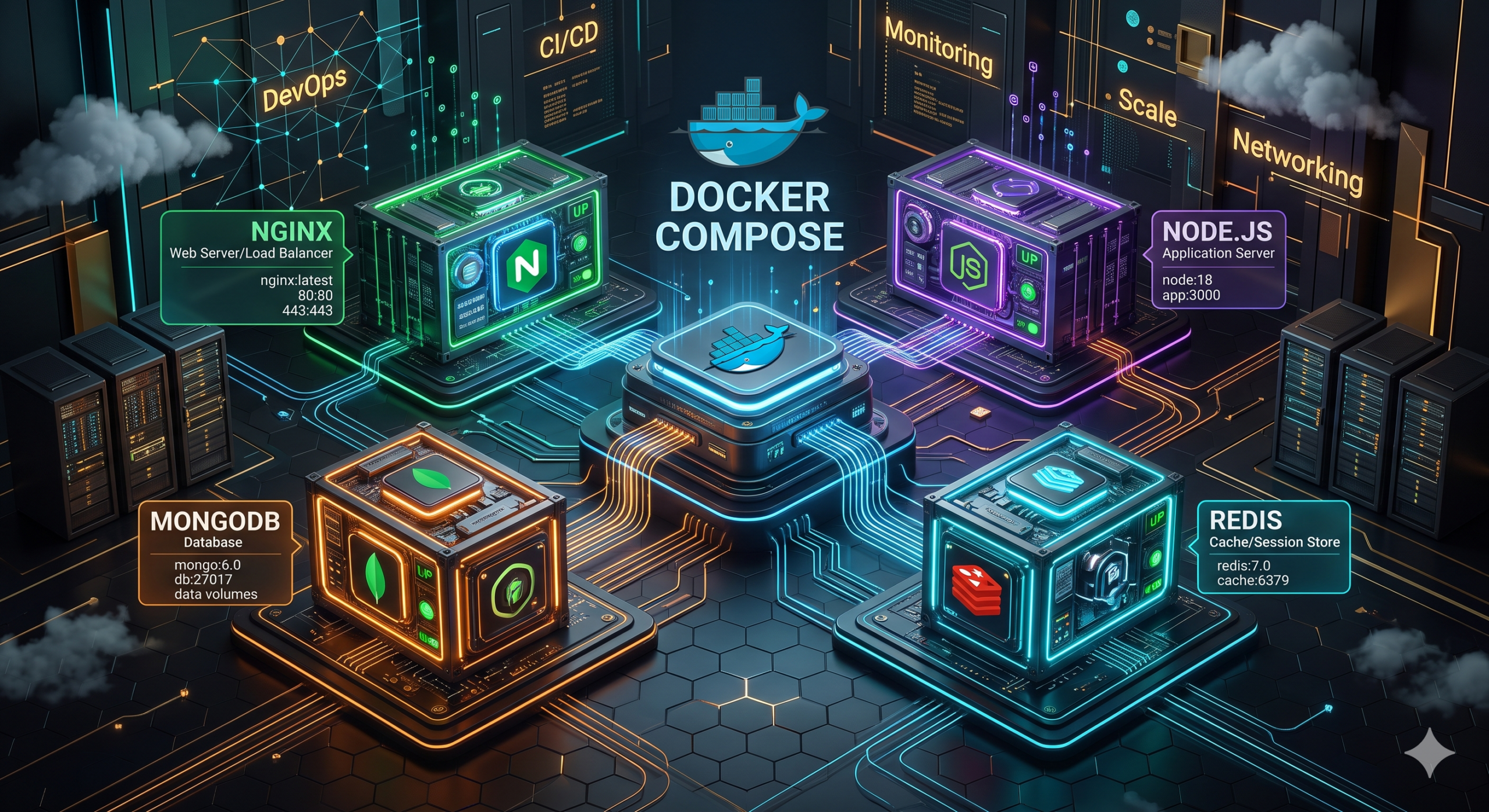
Step 7: Learn Docker
Docker revolutionized software deployment by introducing containers.
Containers package applications with their dependencies, ensuring consistent execution across environments.
Docker Concepts:
- Images
- Containers
- Volumes
- Networks
- Dockerfile
- Docker Compose
Projects:
- Containerize a Node.js application
- Deploy a React application using Docker
- Build multi-container applications
Docker knowledge is expected in almost every DevOps role.
Step 8: Learn Kubernetes
Kubernetes is the most widely used container orchestration platform.
It manages containerized applications at scale.
Key Kubernetes Concepts:
- Pods
- Deployments
- Services
- Namespaces
- ConfigMaps
- Secrets
- Ingress
- StatefulSets
Benefits:
- Auto-scaling
- Self-healing
- Load balancing
- High availability
Real-world organizations use Kubernetes extensively in production environments.
Step 9: Learn Infrastructure as Code (IaC)
Infrastructure as Code allows engineers to manage infrastructure using code instead of manual configuration.
Most Popular Tool:
Terraform
Terraform enables infrastructure automation across AWS, Azure, and Google Cloud.
Topics:
- Providers
- Resources
- Variables
- Modules
- State management
Benefits:
- Repeatability
- Automation
- Version control
- Reduced human errors
Terraform has become a must-have skill for modern DevOps Engineers.
Step 10: Learn Configuration Management
Configuration management tools automate server configuration and application deployment.
Popular Tools:
Ansible
Ansible is beginner-friendly and widely used.
Learn:
- Inventory files
- Playbooks
- Roles
- Variables
- Templates
Benefits:
- Agentless architecture
- Easy automation
- Scalable management
Ansible complements Terraform effectively.
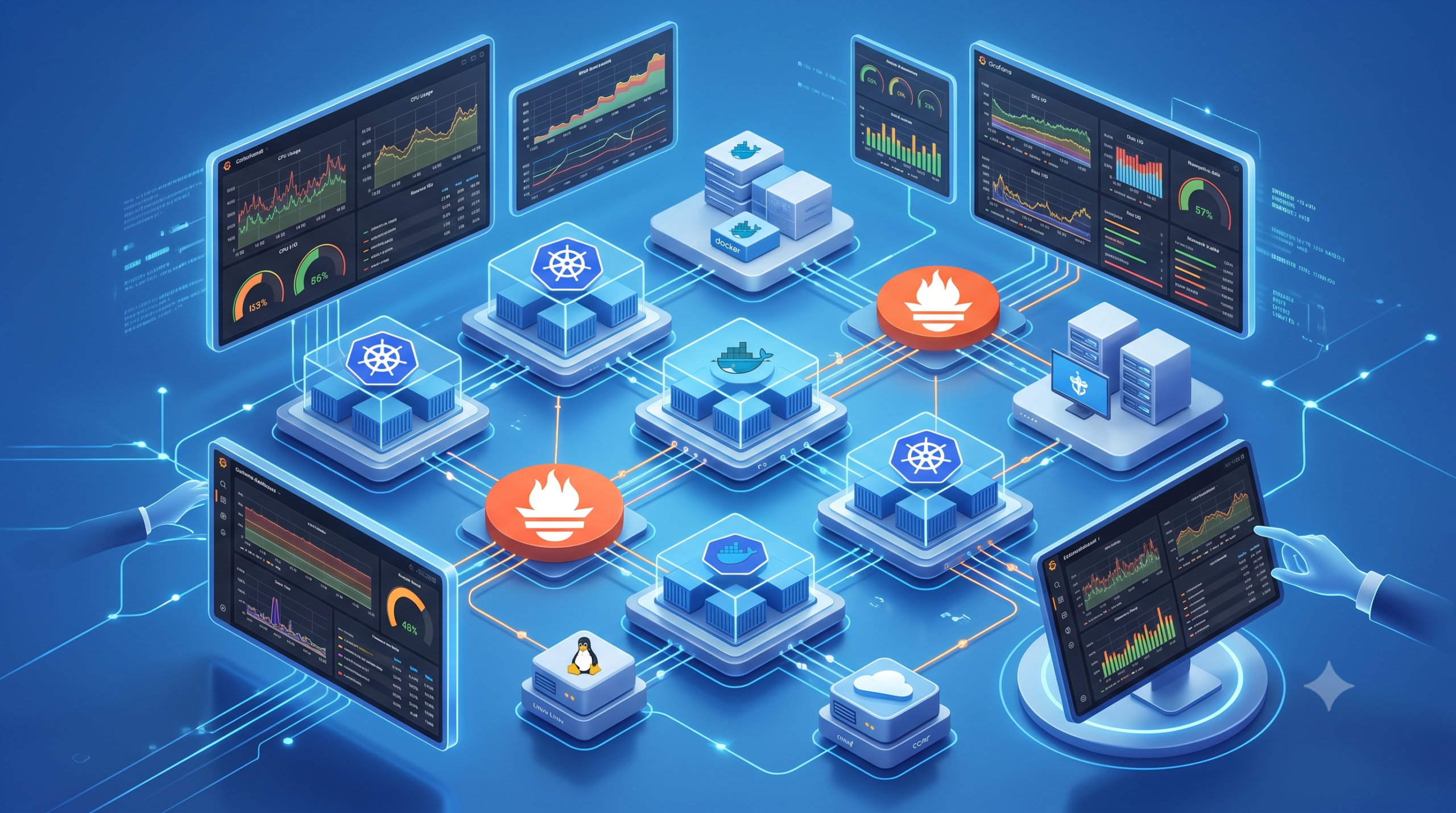
Step 11: Learn Monitoring and Logging
Infrastructure monitoring ensures application performance and availability.
Popular Monitoring Tools:
Prometheus
Metrics collection and monitoring.
Grafana
Visualization dashboards.
ELK Stack
- Elasticsearch
- Logstash
- Kibana
Monitoring Metrics:
- CPU usage
- Memory usage
- Network traffic
- Disk utilization
- Application response time
Companies rely heavily on monitoring to detect issues before users are affected.
Step 12: Learn DevSecOps Fundamentals
Security is now integrated into DevOps practices.
DevSecOps focuses on building security into the software development lifecycle.
Important Areas:
- Vulnerability scanning
- Secret management
- Container security
- Compliance automation
- Security testing
Tools:
- Trivy
- SonarQube
- OWASP ZAP
- HashiCorp Vault
Security skills make DevOps Engineers more valuable in the job market.
Real-World DevOps Projects
Practical experience is crucial.
Project 1:
Deploy a static website on AWS using S3 and CloudFront.
Project 2:
Build a CI/CD pipeline using Jenkins and GitHub.
Project 3:
Deploy a Dockerized application to Kubernetes.
Project 4:
Provision AWS infrastructure using Terraform.
Project 5:
Configure monitoring with Prometheus and Grafana.
Project 6:
Automate server configuration using Ansible.
Employers often value hands-on project experience more than certifications alone.
Recommended Certifications
For beginners:
- AWS Certified Cloud Practitioner
- AWS Solutions Architect Associate
For intermediate professionals:
- AWS DevOps Engineer Professional
- Certified Kubernetes Administrator (CKA)
For advanced professionals:
- HashiCorp Terraform Associate
- Certified Kubernetes Security Specialist (CKS)
Certifications help validate skills and improve credibility during job applications.
Common Mistakes Beginners Make
Learning Too Many Tools at Once
Focus on fundamentals first.
Ignoring Linux
Linux is the foundation of DevOps.
Avoiding Projects
Practical implementation is essential.
Chasing Certifications Only
Certifications should support practical skills, not replace them.
Skipping Networking
Networking knowledge is critical for troubleshooting.
DevOps Learning Timeline
Month 1:
Linux, Networking, Git
Month 2:
Python, Bash, GitHub
Month 3:
AWS Fundamentals
Month 4:
Jenkins and CI/CD
Month 5:
Docker
Month 6:
Kubernetes
Month 7:
Terraform
Month 8:
Ansible
Month 9:
Monitoring and Logging
Month 10:
DevSecOps
Month 11:
Projects
Month 12:
Certification Preparation and Job Applications
Following this roadmap consistently can make you job-ready within 12 months.
Frequently Asked Questions
Is DevOps a good career in 2026?
Yes. DevOps continues to be one of the most in-demand technology careers due to increasing cloud adoption and automation requirements.
Can a fresher become a DevOps Engineer?
Yes. Freshers can enter DevOps by learning Linux, Git, Cloud Computing, Docker, Kubernetes, and automation tools
Which cloud platform should I learn first?
AWS is generally recommended because it has the largest market share and extensive learning resources.
Is coding required for DevOps?
Basic scripting skills in Python and Bash are highly recommended, but deep software development expertise is not mandatory.
How long does it take to learn DevOps?
Most learners can become job-ready within 8 to 12 months with consistent study and practical project work.
Conclusion
DevOps is not a single technology but a combination of practices, tools, and cultural principles that help organizations deliver software efficiently.
The DevOps Roadmap 2026 begins with Linux, Networking, Git, and scripting before progressing toward Cloud Computing, CI/CD, Docker, Kubernetes, Terraform, Monitoring, and DevSecOps.
Success in DevOps comes from continuous learning and hands-on practice. Focus on building projects, understanding real-world infrastructure, and mastering automation. With dedication and consistency, you can build a rewarding career as a DevOps Engineer and remain relevant in an increasingly cloud-driven technology landscape.
Ready to accelerate your DevOps journey? Join our CloudDevOpsHub training program and gain hands-on experience with real-world projects, mentorship, interview preparation, and industry-focused learning paths.

Pingback: Azure Cloud Computing Guide 2026 | Learn Microsoft Azure
Pingback: CI/CD Pipeline Explained | Beginner's Guide 2026
Pingback: Git and GitHub Tutorial for Beginners | Complete Git and GitHub Tutorial Guide 2026
Pingback: Terraform Tutorial: Complete Terraform Tutorial for Beginners to Advanced (2026 Guide)
Pingback: Cloud Engineer vs DevOps Engineer | Salary, Skills & Career Guide 2026