
AWS Roadmap 2026: Complete Learning Path for Beginners
Introduction
Cloud computing has become the backbone of modern technology, and Amazon Web Services (AWS) continues to lead the global cloud market. From startups to Fortune 500 companies, organizations rely on AWS to build scalable, secure, and highly available applications.
As businesses continue migrating their infrastructure to the cloud, the demand for AWS professionals is growing rapidly. Whether you are a student, fresher, software developer, system administrator, or IT professional looking to switch careers, learning AWS can open doors to exciting opportunities in Cloud Computing, DevOps, Site Reliability Engineering (SRE), and Solutions Architecture.
However, one of the biggest challenges beginners face is understanding where to start. AWS offers more than 200 cloud services, making it easy to feel overwhelmed. Many learners jump directly into advanced services without building a strong foundation, which often leads to confusion and frustration.
This AWS Roadmap 2026 provides a structured learning path that helps you learn cloud computing step by step. Instead of trying to learn everything at once, you will focus on the most important AWS services, practical skills, certifications, and projects that employers value.
By following this roadmap, you will understand:
- How AWS works
- Which services to learn first
- Which certifications to pursue
- What projects to build
- How to become job-ready in cloud computing
What is AWS?
Amazon Web Services (AWS) is the world’s leading cloud computing platform developed by Amazon. It provides on-demand computing resources such as virtual servers, storage, databases, networking, security, analytics, machine learning, and serverless computing.
Instead of purchasing expensive physical servers and maintaining data centers, organizations can rent computing resources from AWS and pay only for what they use.
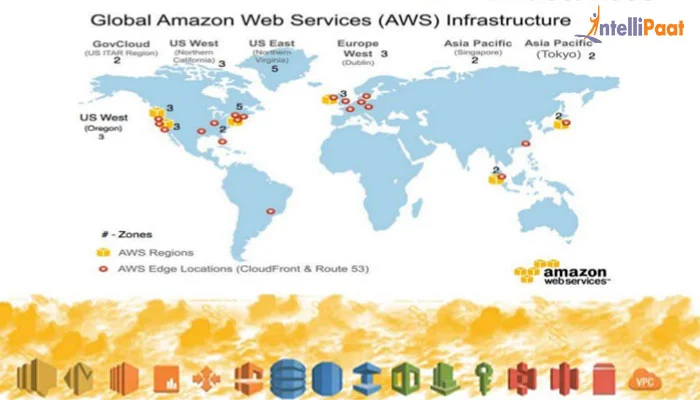
AWS operates through a global network of data centers distributed across multiple regions and availability zones. This allows businesses to deploy applications closer to users while ensuring high availability and fault tolerance.
Some of the world’s largest companies use AWS, including streaming platforms, e-commerce businesses, financial institutions, healthcare providers, gaming companies, and government organizations.
The popularity of AWS comes from several advantages:
- Scalability
- Reliability
- Security
- Cost efficiency
- Global reach
- Extensive service offerings
Because of these benefits, AWS skills remain highly valuable in the technology job market.
Why Learn AWS in 2026?
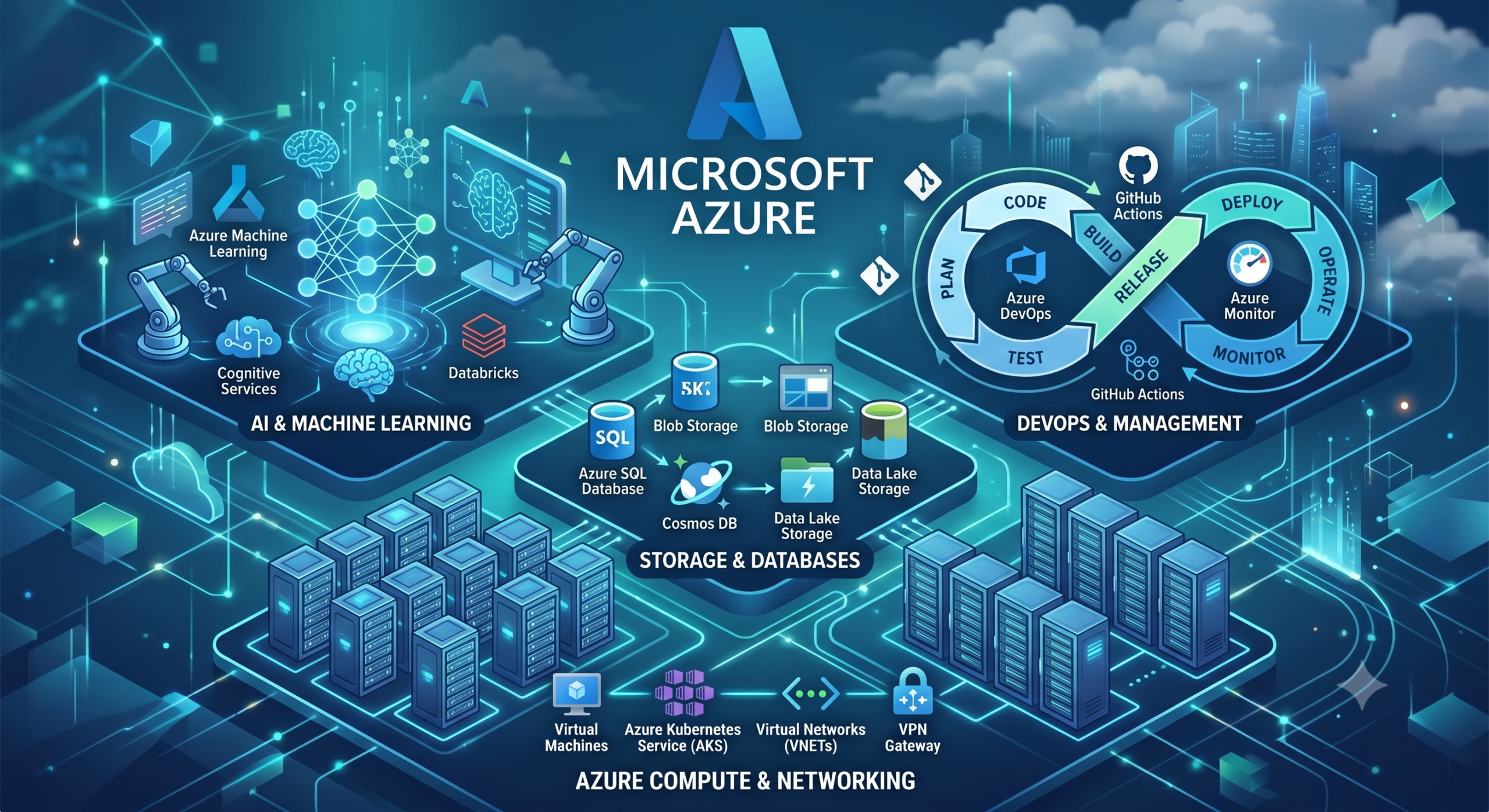
Many learners ask whether AWS is still worth learning when there are alternatives such as Microsoft Azure and Google Cloud Platform.
The answer is yes.
AWS continues to maintain a dominant position in the cloud industry and is used by millions of customers worldwide.
High Industry Demand
Organizations are continuously moving applications from traditional infrastructure to cloud environments. This migration creates ongoing demand for AWS professionals who can design, deploy, secure, and manage cloud infrastructure.
Strong Career Opportunities
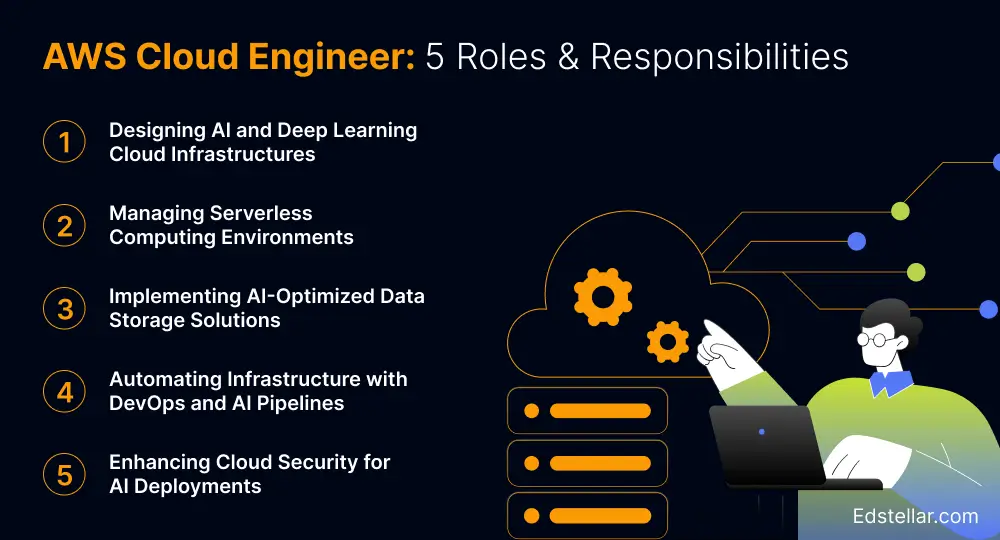
Learning AWS can lead to roles such as:
- Cloud Engineer
- DevOps Engineer
- Cloud Administrator
- Solutions Architect
- Site Reliability Engineer
- Cloud Consultant
- Infrastructure Engineer
Better Salary Potential
AWS-certified professionals often command competitive salaries because cloud expertise is considered a specialized and valuable skill set.
Essential for DevOps Careers
If your goal is to become a DevOps Engineer, AWS knowledge is almost mandatory. Modern DevOps workflows rely heavily on cloud infrastructure, automation, CI/CD pipelines, monitoring, and container orchestration.
This is why AWS Roadmap 2026 should be considered an essential part of your overall DevOps Roadmap.
AWS Fundamentals Every Beginner Must Learn
Before diving into advanced services, you must understand the core concepts that form the foundation of cloud computing.
Cloud Computing Models
There are three major cloud service models:
Infrastructure as a Service (IaaS)
Provides virtualized infrastructure such as servers, storage, and networking.
Examples:
- Amazon EC2
- Amazon EBS
- Amazon VPC
Platform as a Service (PaaS)
Provides development platforms that simplify application deployment.
Examples:
- AWS Elastic Beanstalk
- AWS Lambda
Software as a Service (SaaS)
Provides complete software solutions accessed through the internet.
Examples:
- Gmail
- Microsoft 365
- Salesforce
AWS Global Infrastructure
Understanding AWS infrastructure is critical.
AWS consists of:
Regions
Physical geographic locations containing multiple data centers.
Examples:
- Mumbai
- Singapore
- Frankfurt
- London
- North Virginia
Availability Zones
Independent data centers within a region that provide redundancy and high availability.
Edge Locations
Used by services such as CloudFront to deliver content closer to users.
Understanding these concepts helps you design reliable and fault-tolerant architectures.
Step 1: Learn AWS Identity and Access Management (IAM)
IAM is the first AWS service every beginner should learn.
It controls:
- Authentication
- Authorization
- User access
- Permissions
- Security policies
IAM allows organizations to securely manage who can access AWS resources and what actions they can perform.
Important IAM Concepts:
Users
Individual identities within AWS.
Groups
Collections of users with shared permissions.
Roles
Temporary permissions assigned to services or users.
Policies
JSON-based permission documents that define access controls.
Best Practice:
Never use the root account for daily activities. Create IAM users and apply least-privilege access principles.
IAM is the foundation of AWS security and should be mastered before learning other services.
Step 2: Learn Amazon EC2
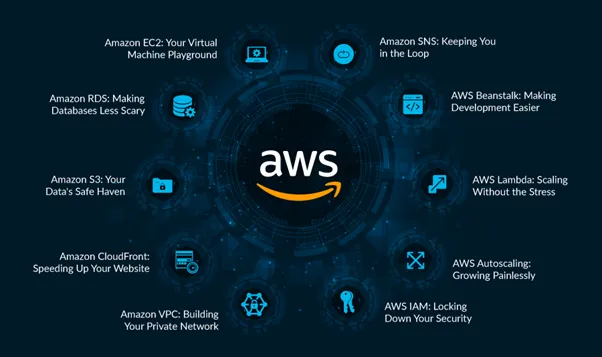
Amazon Elastic Compute Cloud (EC2) is one of the most important AWS services.
EC2 allows you to launch virtual machines in the cloud.
Key Concepts:
- Instances
- AMIs
- Security Groups
- Key Pairs
- Elastic IPs
- Auto Scaling
Practical Tasks:
- Launch an EC2 instance
- Install a web server
- Configure SSH access
- Host a website
Most cloud projects begin with EC2, making it an essential service for beginners.
Step 3: Learn Amazon S3
Amazon Simple Storage Service (S3) is AWS’s object storage service.
It is widely used for:
- Backup storage
- Website hosting
- Media storage
- Data lakes
- Disaster recovery
Key Features:
- High durability
- Scalability
- Security
- Lifecycle management
Hands-On Project:
Create a static website using Amazon S3 hosting.
This project teaches cloud storage fundamentals and is often recommended for beginners.
Step 4: Learn Amazon VPC
Amazon Virtual Private Cloud (VPC) allows you to create your own isolated network environment inside AWS.
Think of a VPC as your private data center in the cloud where you control networking, security, routing, and connectivity.
Why VPC is Important
Every production-grade AWS environment uses VPC.
Without understanding VPC, it becomes difficult to deploy secure and scalable cloud architectures.
Key VPC Components
Subnets
Subnets divide a VPC into smaller network segments.
Types:
- Public Subnet
- Private Subnet
Internet Gateway
Allows communication between your VPC and the internet.
Route Tables
Control traffic routing between networks.
NAT Gateway
Allows private resources to access the internet securely.
Security Groups
Acts as a virtual firewall at the instance level.
Network ACLs
Provides subnet-level security controls.
Hands-On Practice
- Create a VPC
- Configure public and private subnets
- Launch EC2 instances
- Configure internet access
Understanding VPC networking is a crucial skill for Cloud Engineers and DevOps Engineers.
Step 5: Learn Amazon RDS
Applications need databases, and AWS provides managed database services through Amazon RDS (Relational Database Service).
Instead of manually installing databases, AWS handles:
- Patching
- Backups
- Monitoring
- High Availability
- Scaling
Supported Databases
- MySQL
- PostgreSQL
- MariaDB
- Oracle
- SQL Server
Benefits of RDS
- Automated backups
- Multi-AZ deployment
- Automatic patching
- Easy scalability
- Enhanced security
Beginner Project
Deploy a web application using:
- EC2
- RDS
- S3
This project introduces you to a complete cloud architecture.
Step 6: Learn AWS Lambda
AWS Lambda is a serverless computing service.
Serverless means you don’t manage servers directly.
AWS automatically:
- Provisions infrastructure
- Handles scaling
- Manages availability
- Performs maintenance
Benefits
- Pay only for execution time
- Automatic scaling
- Reduced operational overhead
- Faster development
Common Use Cases
- Image processing
- Automation scripts
- API backends
- Event-driven workflows
Beginner Project
Create a Lambda function that automatically processes files uploaded to S3.
This project demonstrates event-driven cloud architecture.
Step 7: Learn Amazon CloudWatch
Monitoring is critical in cloud environments.
Amazon CloudWatch helps monitor:
- Infrastructure
- Applications
- Logs
- Performance metrics
Key Features
Metrics
Monitor CPU, memory, network traffic, and disk activity.
Logs
Collect and analyze application logs.
Alarms
Trigger notifications when thresholds are exceeded.
Dashboards
Visualize infrastructure performance.
CloudWatch is one of the most important services for maintaining healthy production systems.
Step 8: Learn Route 53
Route 53 is AWS’s DNS service.
It helps users access applications using domain names instead of IP addresses.
Example:
Instead of:
52.12.34.56
Users access:
bestdevopstrainer.com
Route 53 Features
- DNS management
- Domain registration
- Health checks
- Traffic routing
Every Cloud Engineer should understand DNS fundamentals.
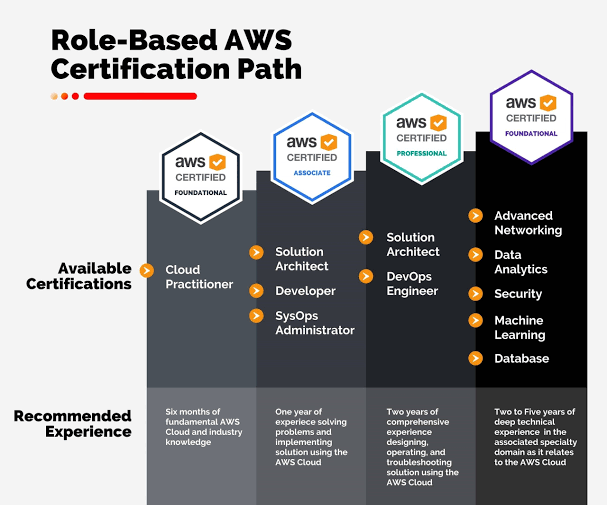
AWS Certification Roadmap 2026
Certifications are not mandatory, but they help validate your skills.
Beginner Level
AWS Certified Cloud Practitioner
Best for:
- Students
- Freshers
- Non-technical professionals
Focus Areas:
- Cloud concepts
- AWS basics
- Pricing
- Security
Intermediate Level
AWS Solutions Architect Associate
Most recommended certification for beginners entering cloud computing.
Topics:
- VPC
- EC2
- S3
- RDS
- Security
- High Availability
This certification is highly respected by employers.
Advanced Level
AWS DevOps Engineer Professional
Best for:
- DevOps Engineers
- Cloud Engineers
- Automation Specialists
Topics:
- CI/CD
- Monitoring
- Infrastructure Automation
- Security
AWS Projects for Beginners
Projects are often more valuable than certifications.
Recruiters want proof that you can implement solutions.
Project 1
Static Website Hosting using S3
Skills Learned:
- S3
- CloudFront
- Route 53
Project 2
Deploy a WordPress Website on AWS
Skills Learned:
- EC2
- Security Groups
- Networking
Project 3
Three-Tier Application Architecture
Components:
- Load Balancer
- EC2
- RDS
Skills Learned:
- Scalability
- Availability
- Security
Project 4
CI/CD Pipeline using AWS
Tools:
- GitHub
- Jenkins
- AWS
Skills Learned:
- Automation
- Deployment
- Monitoring
Project 5
Infrastructure as Code
Tools:
- Terraform
- AWS
Skills Learned:
- Automation
- Infrastructure provisioning
- Version control
AWS Career Paths
Learning AWS can open multiple career opportunities.
Cloud Engineer
Responsibilities:
- Infrastructure deployment
- Server management
- Monitoring
DevOps Engineer
Responsibilities:
- Automation
- CI/CD
- Infrastructure as Code
Cloud Architect
Responsibilities:
- Solution design
- Security architecture
- Cost optimization
Site Reliability Engineer (SRE)
Responsibilities:
- Reliability
- Performance optimization
- Incident management
Common Mistakes Beginners Make
Learning Too Many Services
AWS has more than 200 services.
Start with:
- IAM
- EC2
- S3
- VPC
- RDS
Master these first.
Skipping Hands-On Practice
Watching videos is not enough.
Build projects regularly.
Chasing Certifications Only
Certifications should support practical knowledge, not replace it.
Ignoring Networking
Networking is the backbone of cloud computing.
Understand:
- DNS
- Routing
- Firewalls
- Load Balancers
Not Learning Linux
Most cloud workloads run on Linux servers.
Linux knowledge remains essential.
AWS Learning Timeline
Month 1
- Cloud Fundamentals
- Linux Basics
- IAM
Month 2
- EC2
- S3
- Route 53
Month 3
- VPC
- Security
- RDS
Month 4
- Lambda
- CloudWatch
- Monitoring
Month 5
- Projects
Month 6
- Certification Preparation
Following this roadmap consistently can make you job-ready within six months.
Frequently Asked Questions
Is AWS worth learning in 2026?
Yes. AWS remains one of the most widely adopted cloud platforms and continues to offer excellent career opportunities.
Can a fresher learn AWS?
Absolutely. AWS is beginner-friendly when learned through a structured roadmap.
Which AWS certification should I start with?
AWS Certified Cloud Practitioner or AWS Solutions Architect Associate.
Is coding required for AWS?
Basic scripting knowledge is helpful, but deep programming expertise is not mandatory for beginners.
How long does it take to learn AWS?
Most learners can gain practical AWS skills within 4-6 months through consistent learning and project work.
Can AWS help me become a DevOps Engineer?
Yes. AWS is one of the most important technologies used in modern DevOps environments.
Conclusion
AWS continues to be one of the most valuable technologies for anyone pursuing a career in Cloud Computing, DevOps, or Infrastructure Engineering. By following this AWS Roadmap 2026, you can systematically build your skills from foundational concepts such as IAM, EC2, and S3 to advanced topics like serverless computing, monitoring, automation, and cloud architecture.
Remember that success in AWS comes from hands-on implementation rather than theory alone. Focus on building projects, experimenting with cloud services, and understanding real-world use cases. As your skills grow, certifications can further validate your expertise and improve your career prospects.
Whether your goal is to become a Cloud Engineer, DevOps Engineer, Solutions Architect, or Site Reliability Engineer, AWS provides a strong foundation for long-term career growth in the cloud industry.
CTA
Ready to build a career in Cloud Computing and DevOps?
Join CloudDevOpsHub’s hands-on training program and gain practical experience with AWS, DevOps tools, real-world projects, interview preparation, and expert mentorship.

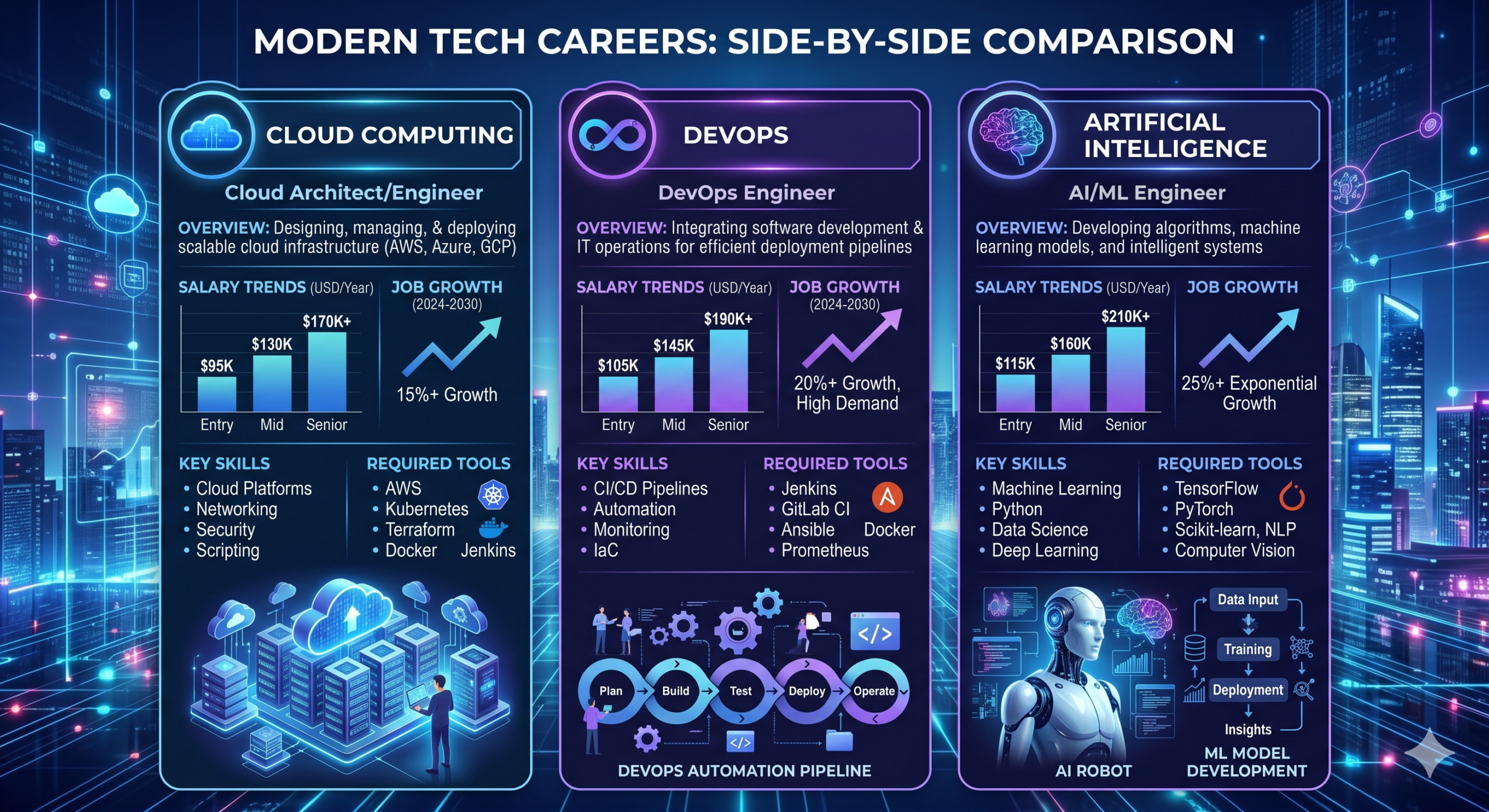
Pingback: Cloud Computing vs DevOps vs AI: Best Career in 2026
Pingback: Git and GitHub Tutorial for Beginners | Complete Git and GitHub Tutorial Guide 2026
Pingback: Terraform Tutorial: Complete Terraform Tutorial for Beginners to Advanced (2026 Guide)
Pingback: DevOps Projects for Beginners | 15 Hands-on Ideas (2026)